CURVES_ADD_STRAIN_RATE_CURVES
CURVES_ADD_STRAIN_RATE_CURVES worker adds curves based on new strain rate and interpolation types.
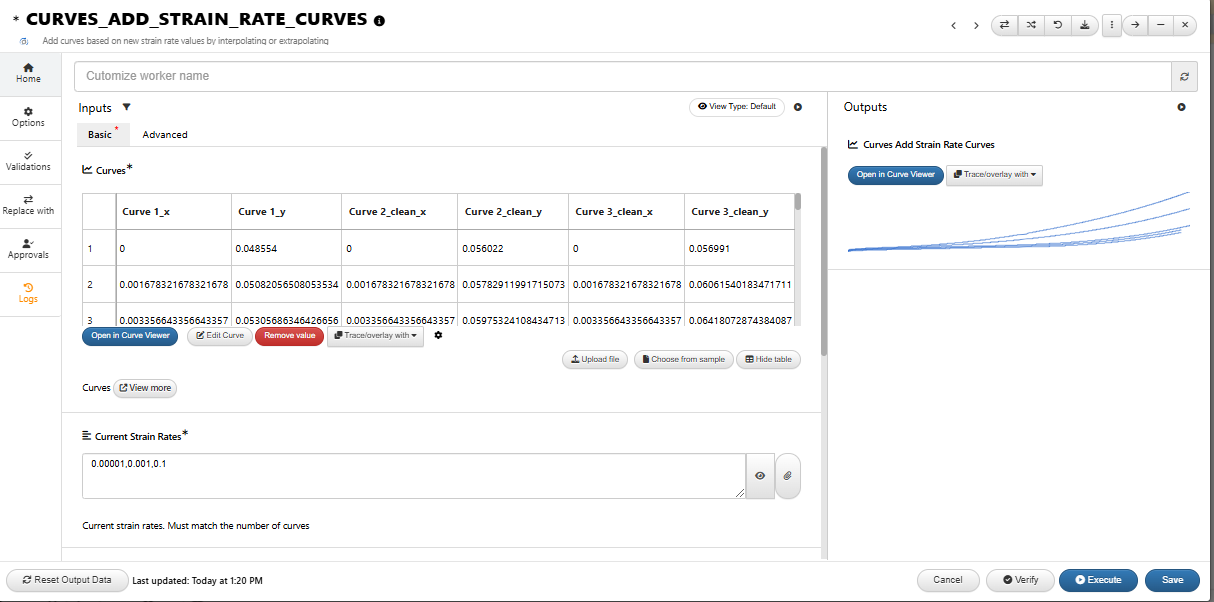
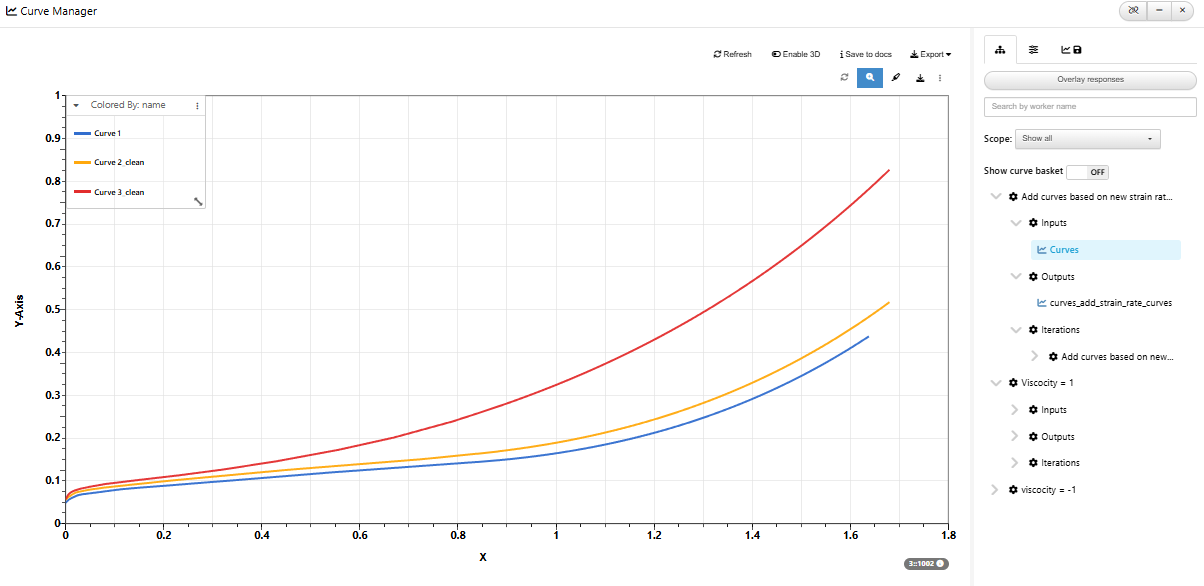
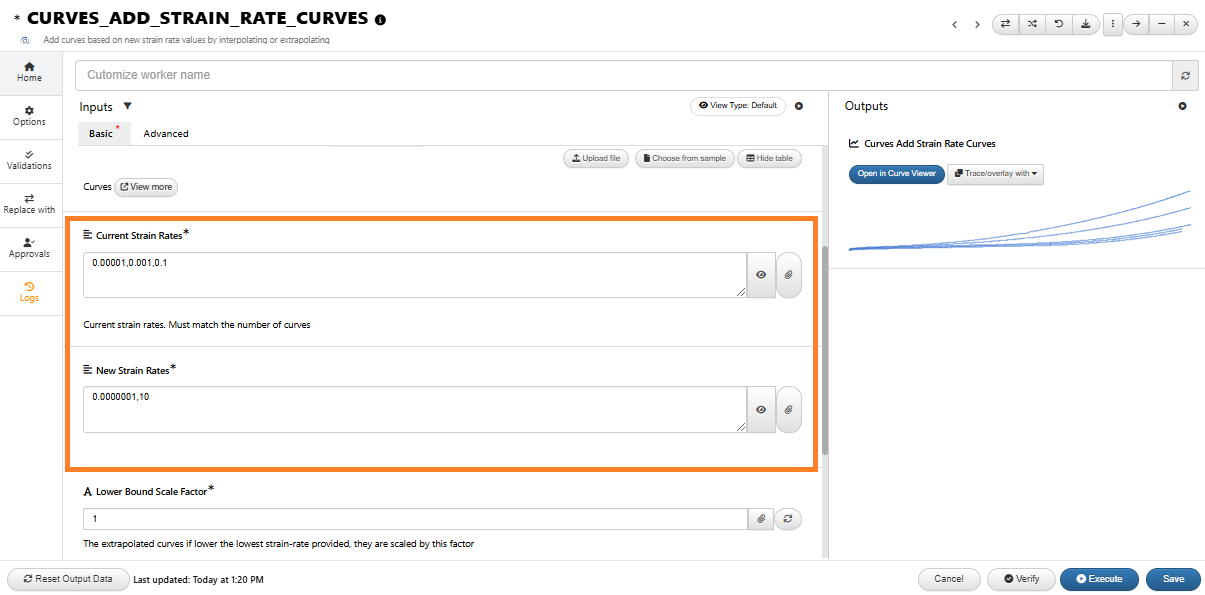
Strain rates
We have options to add current strain rates and new strain rates for which the curves will be generted.
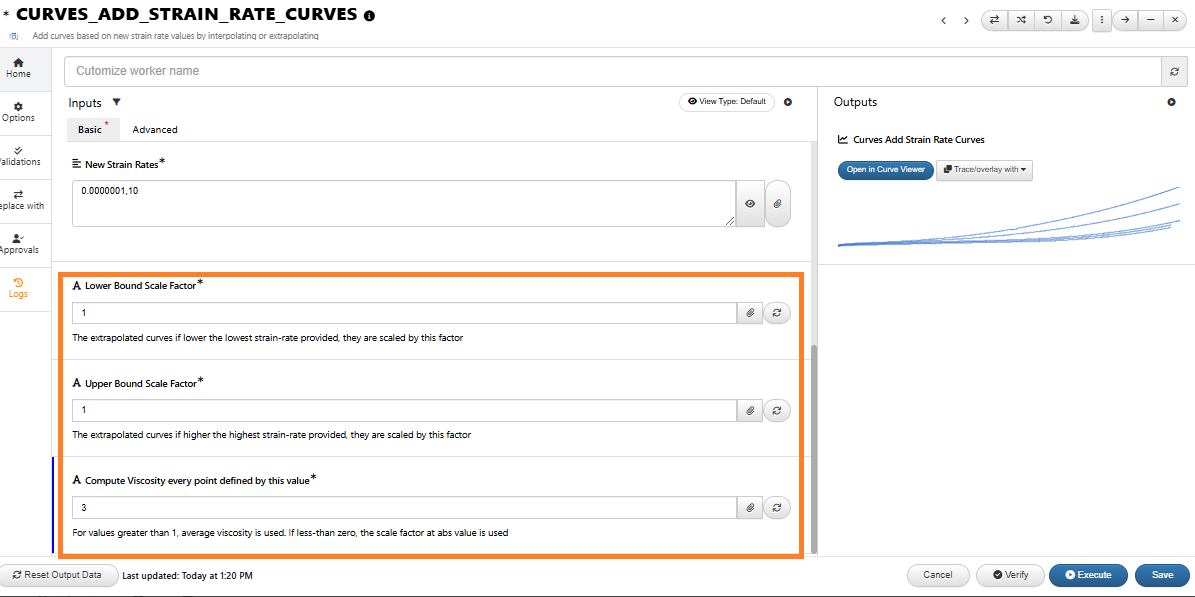
Types of scalling, Interpolation type and Type of values for Dynamic scaling
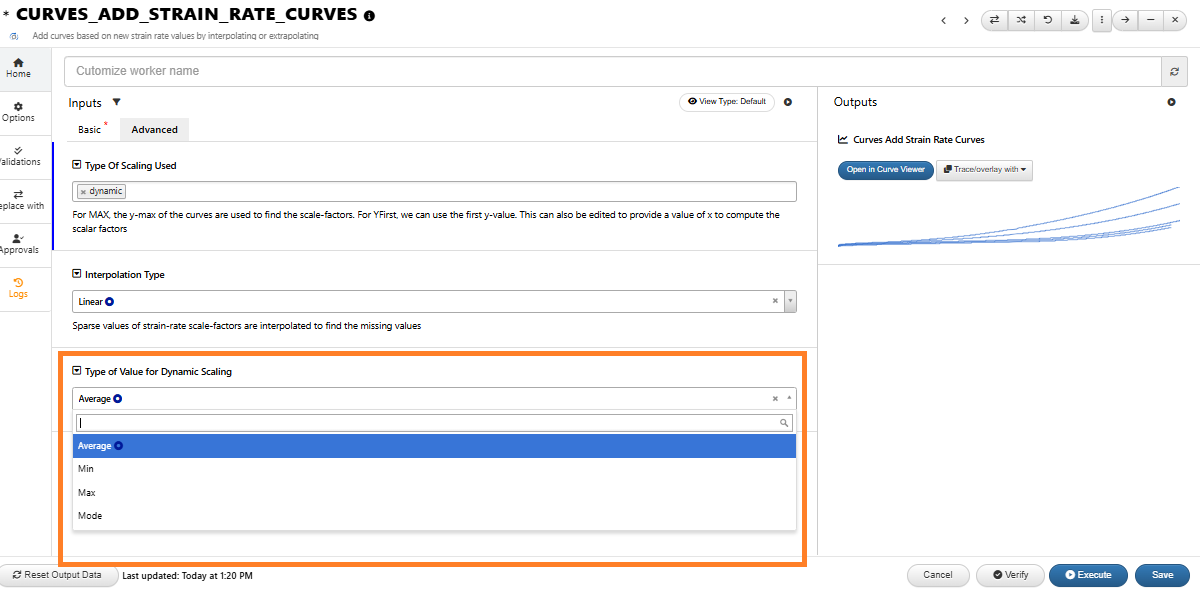
Types of scalling has
1/ Dynamic
2/ Y first
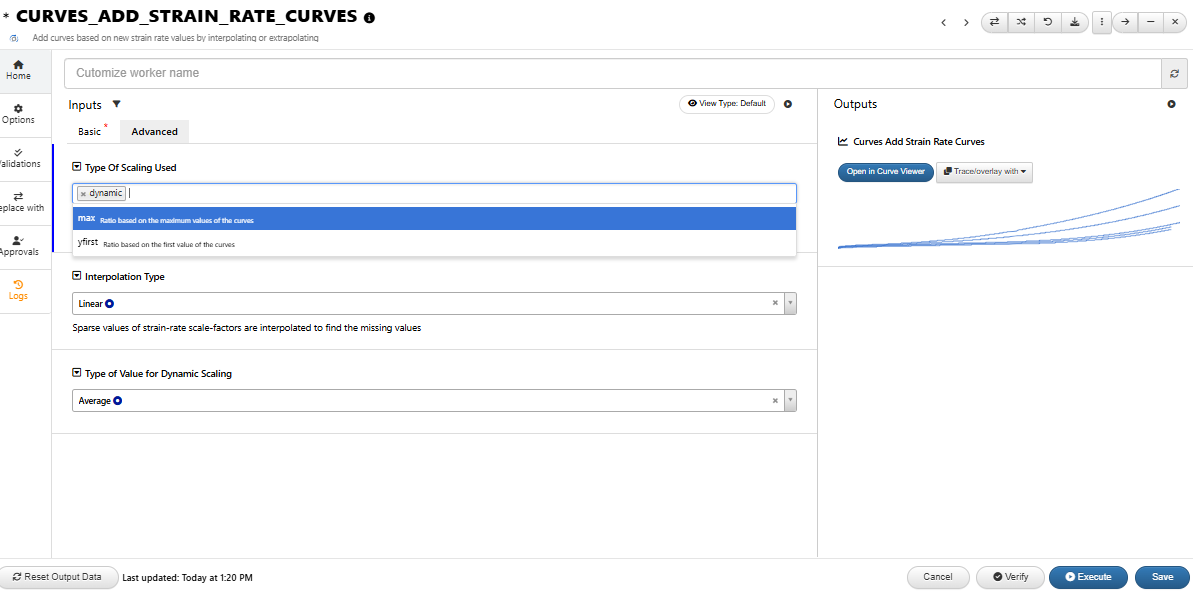
Interpolation has
1/ Linear
2/ PHP
3/ Makima
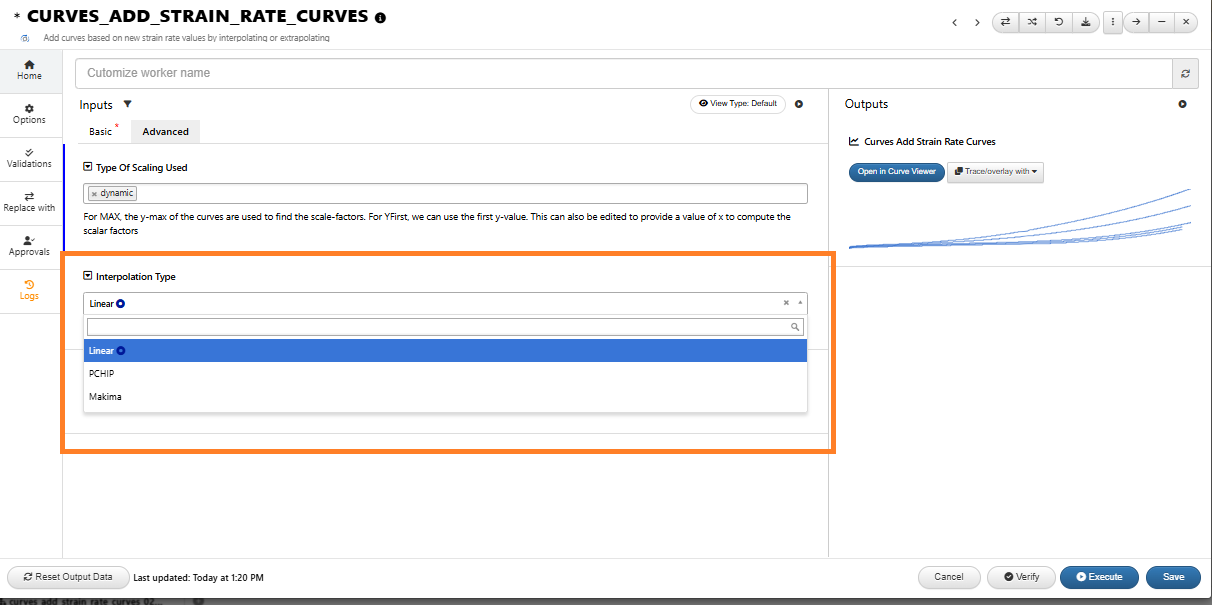
Type of value for Dynamic scaling has
1/ Min
2/ Max
3/ Mode
4/ Average
Example Outputs
Output for Dynamic scalling

Output for Yfirst scaling type
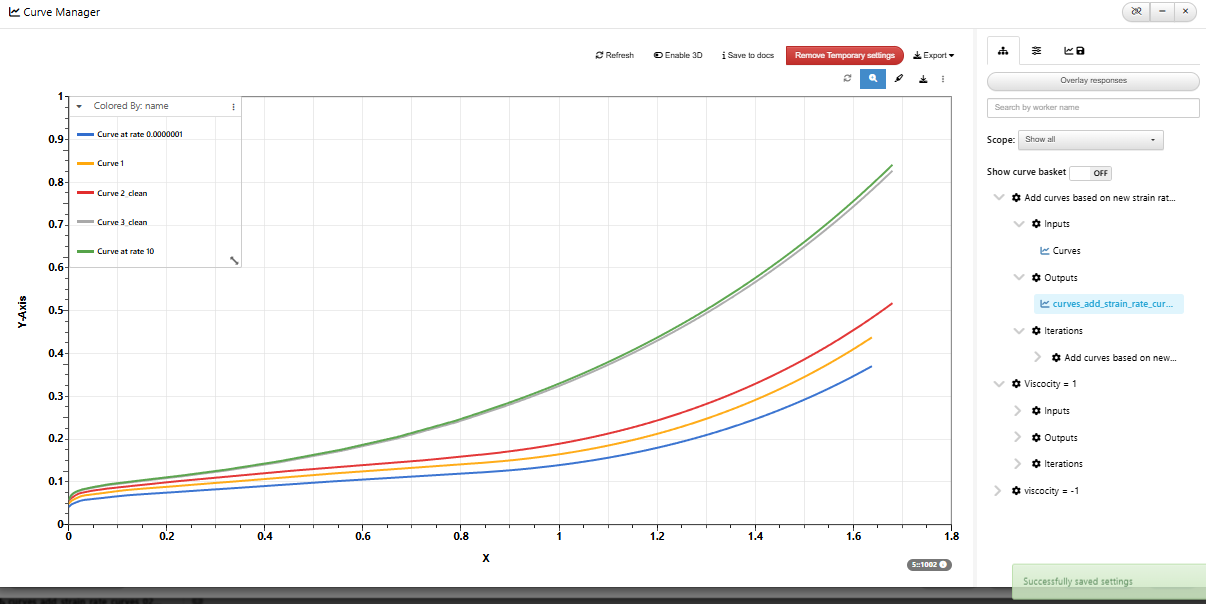
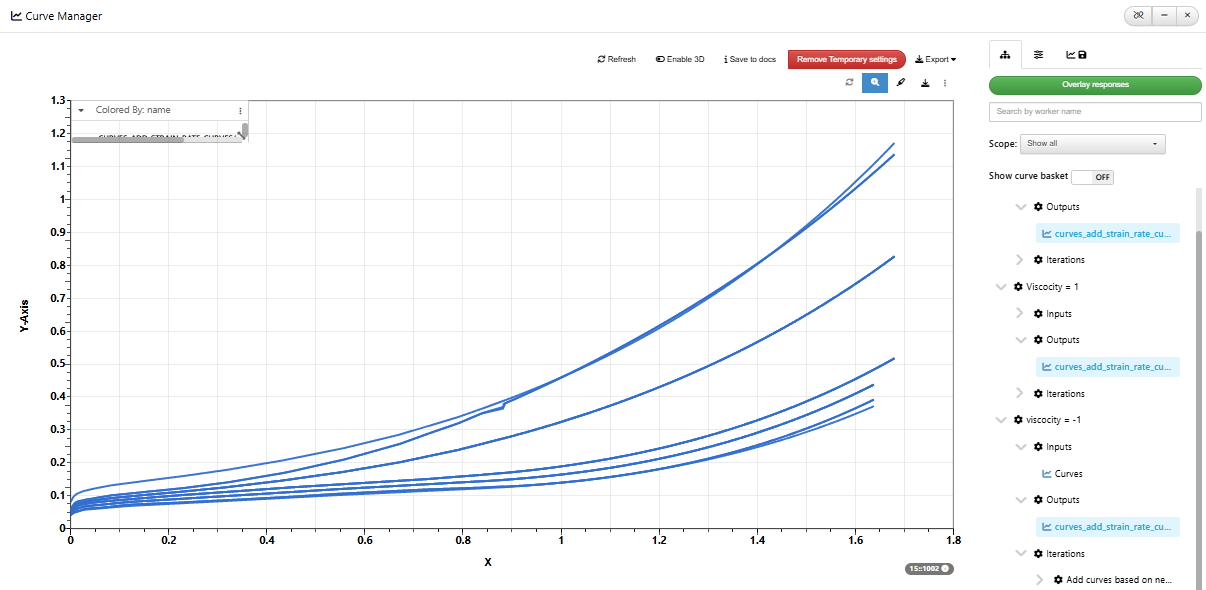
Output example for differnt compute viscocity values overlay
1, -1 and 3
Examples
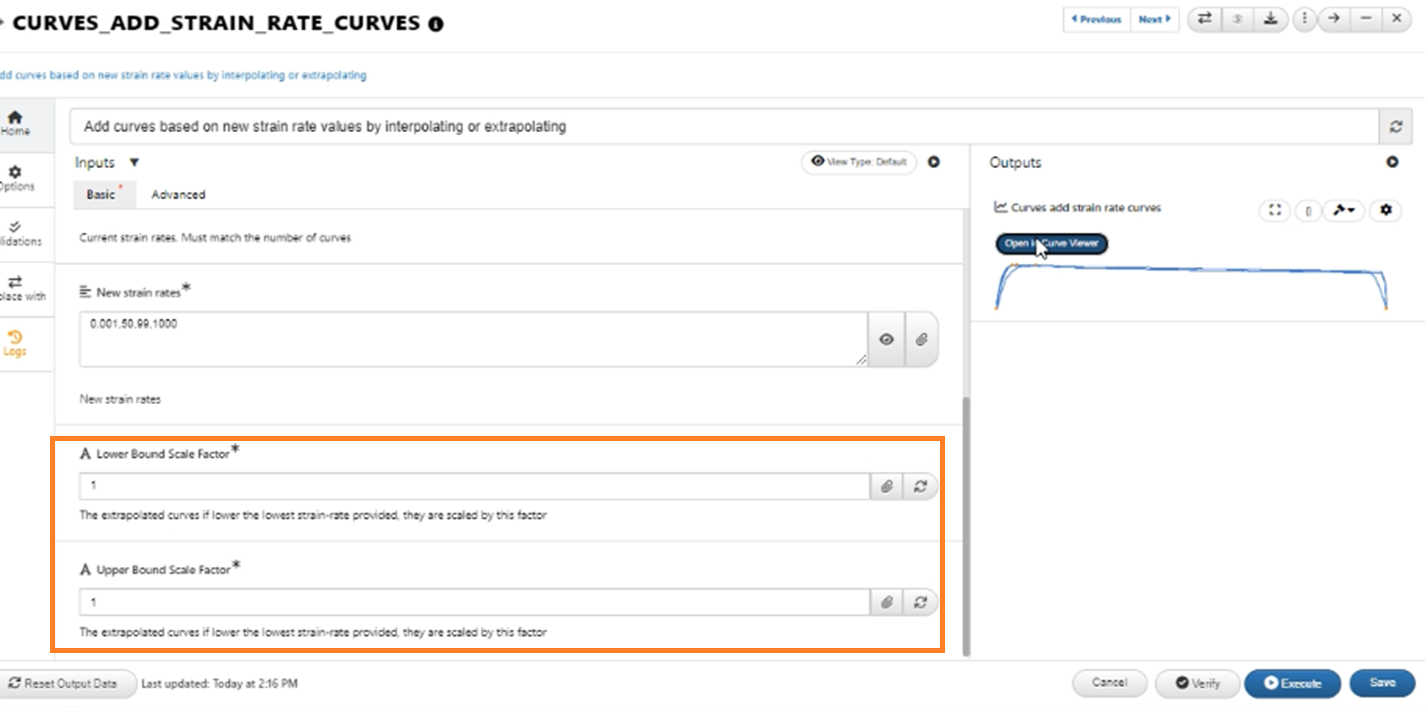
Upper bound and lower bound
We now have to options in this Worker called Lower Bound Scale factor and Upper Bound Scale Factor.
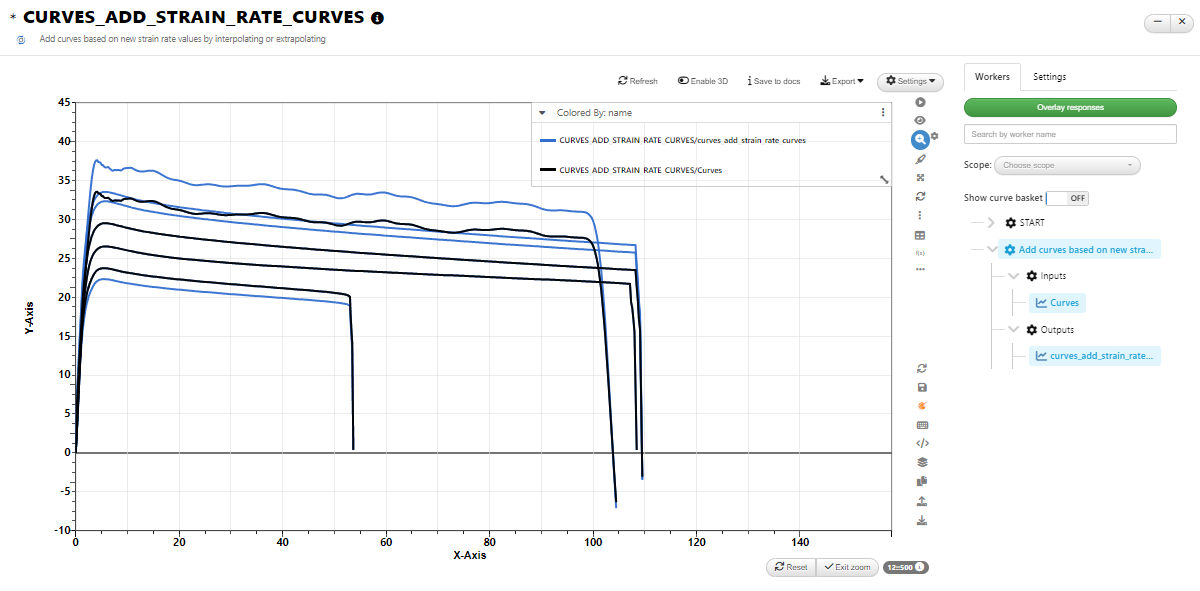
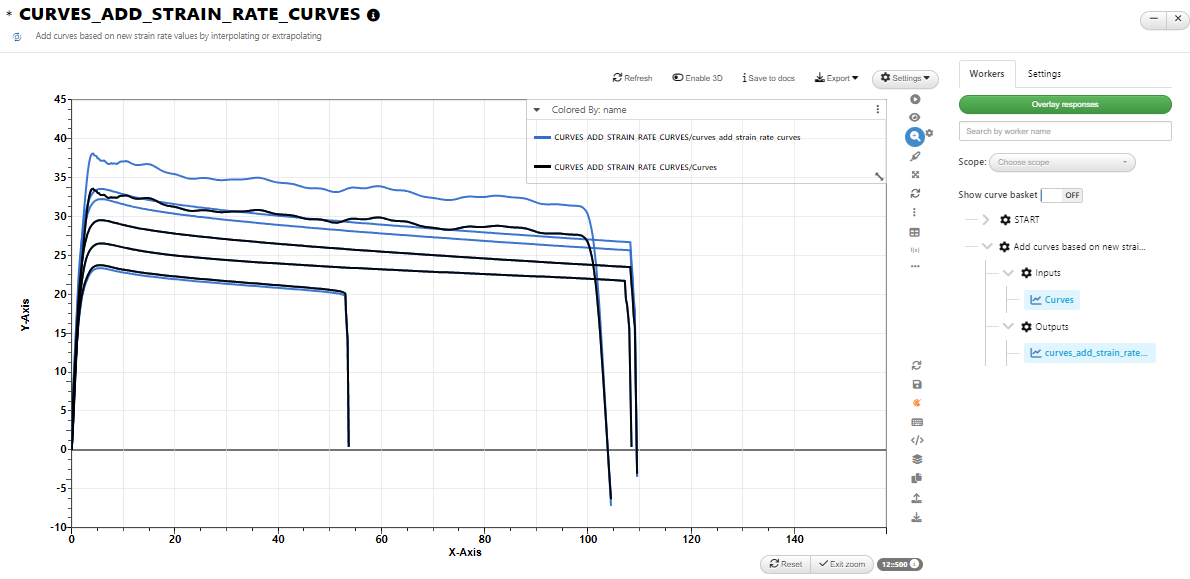
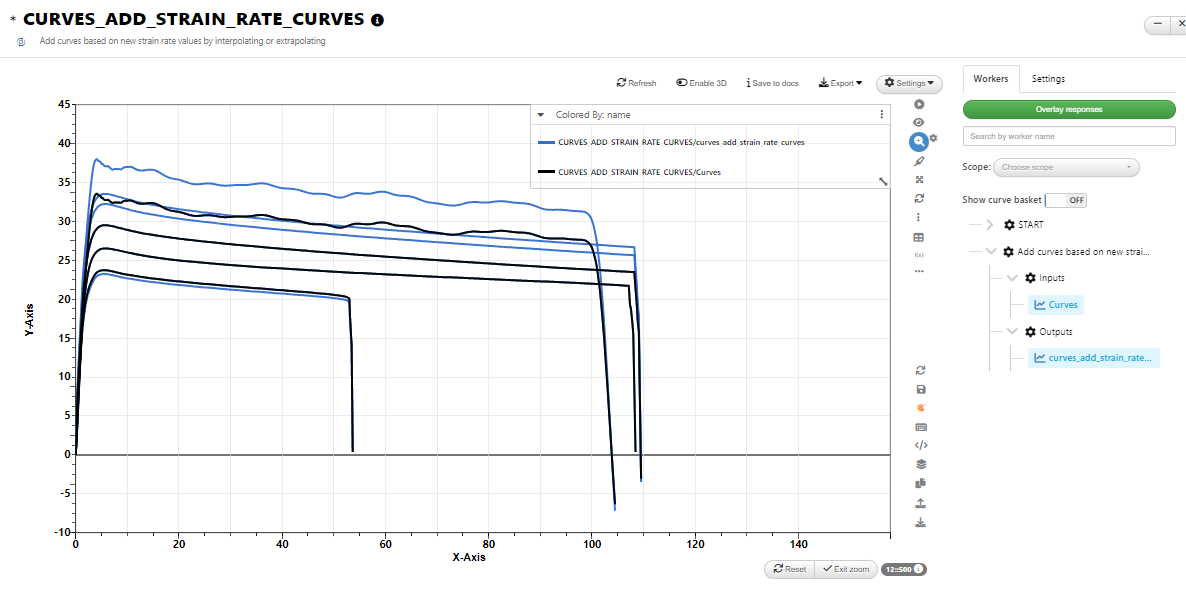
Examples output curves for lower bound and upper bound scale factors.
Lower Bound = 0.5 and Upper Bound = 1.5
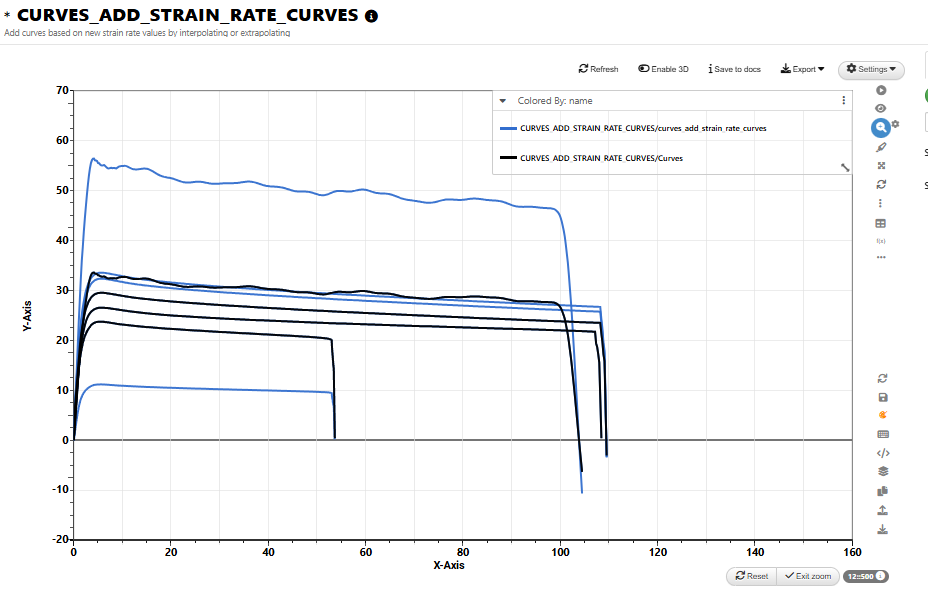
Lower Bound = 0.2 and Upper Bound = 1.7
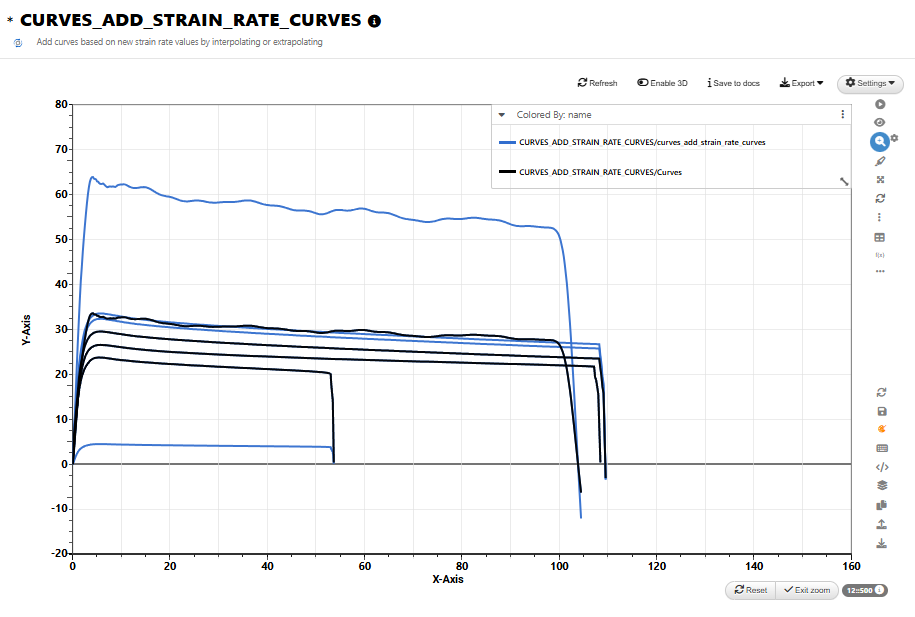
Support for Type of scaling.
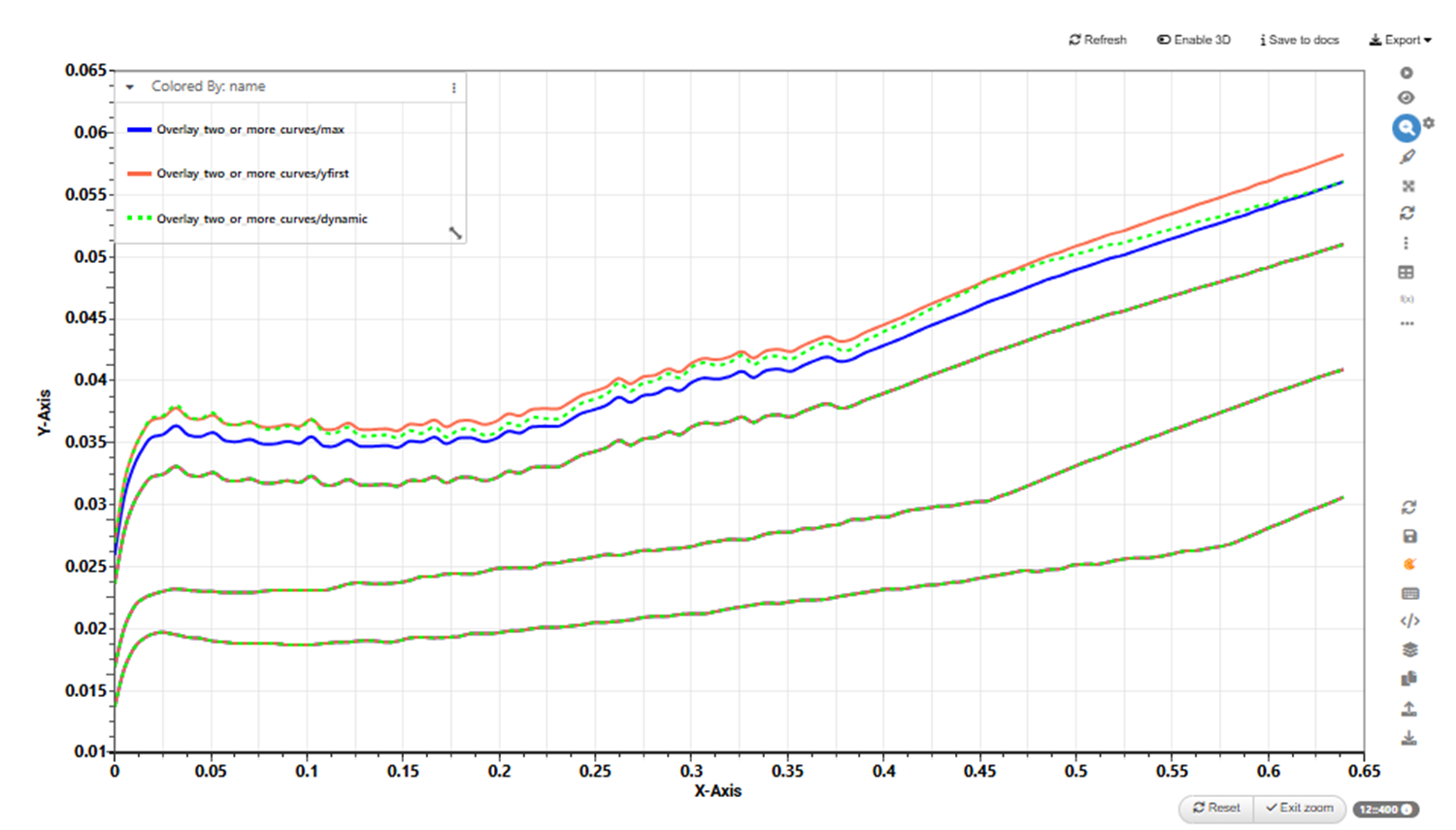
yfirst
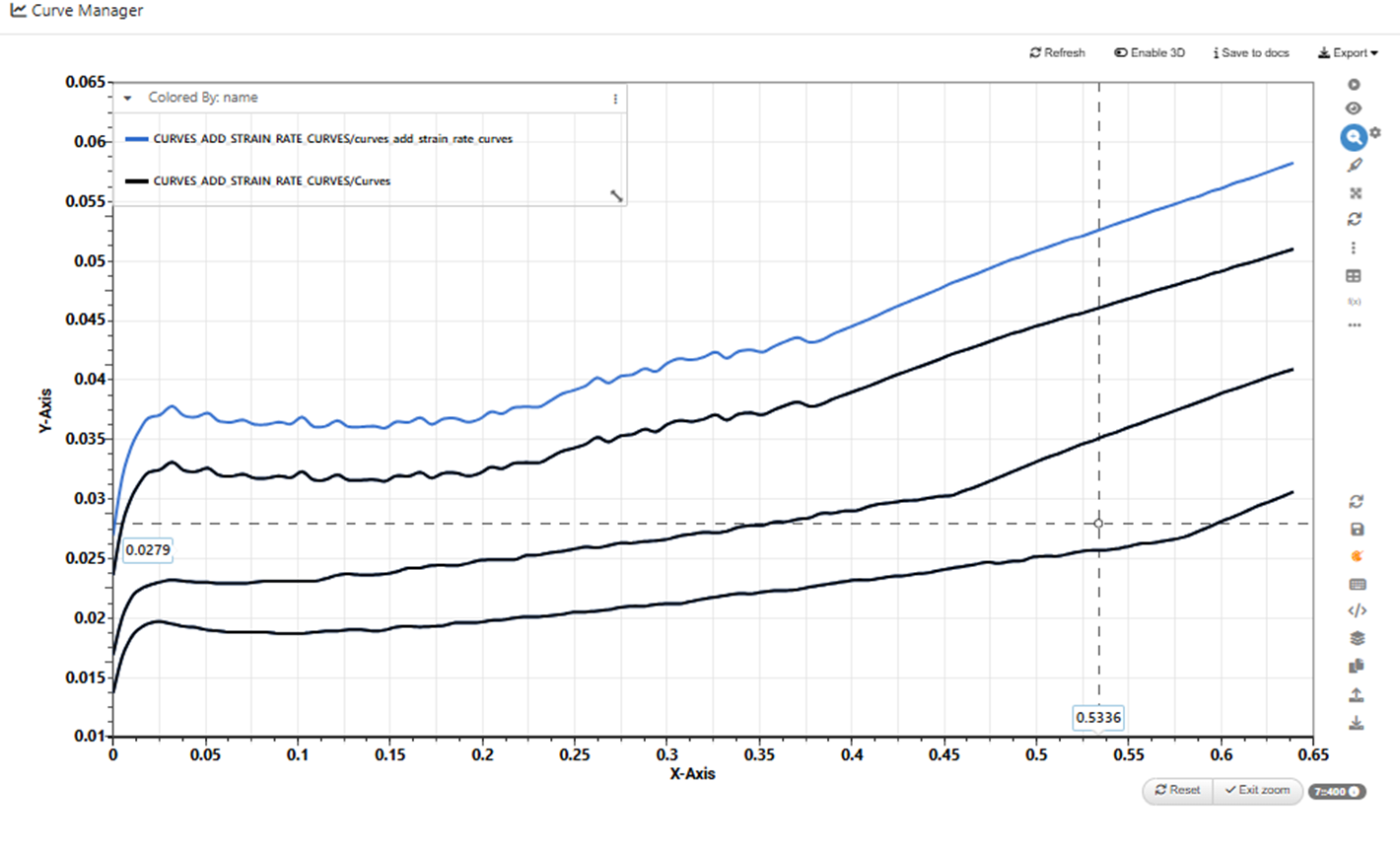
Max
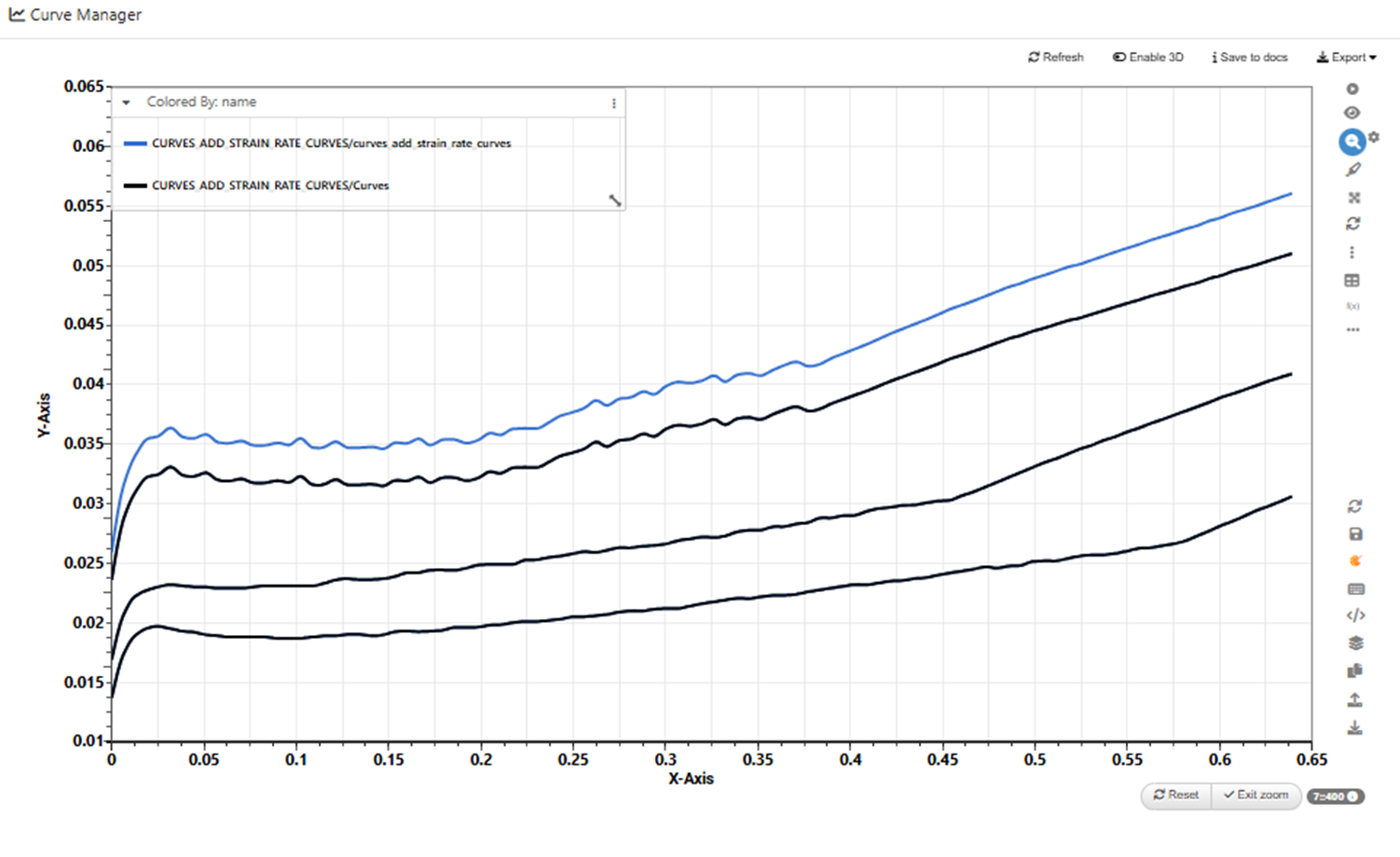
Dynamic
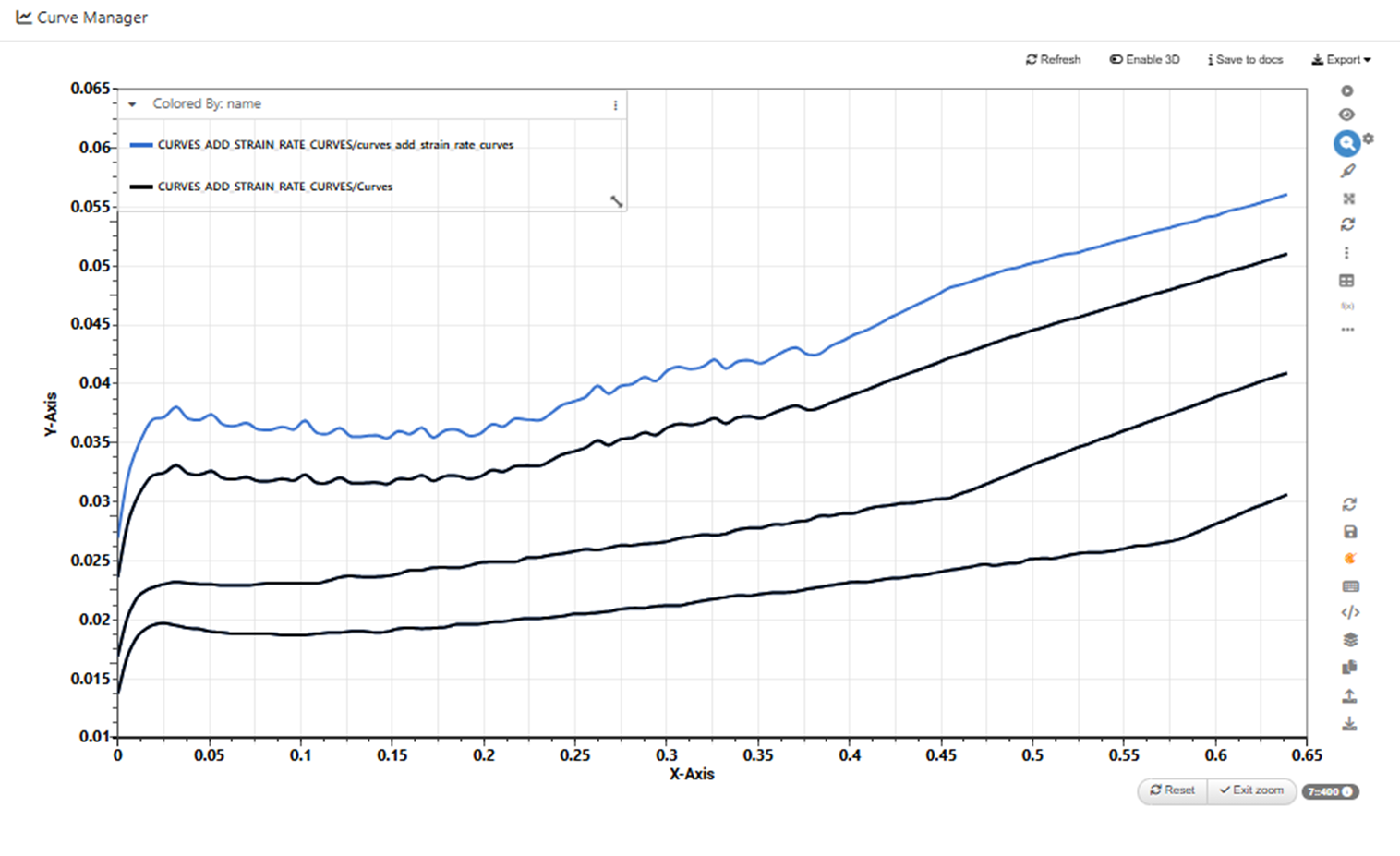
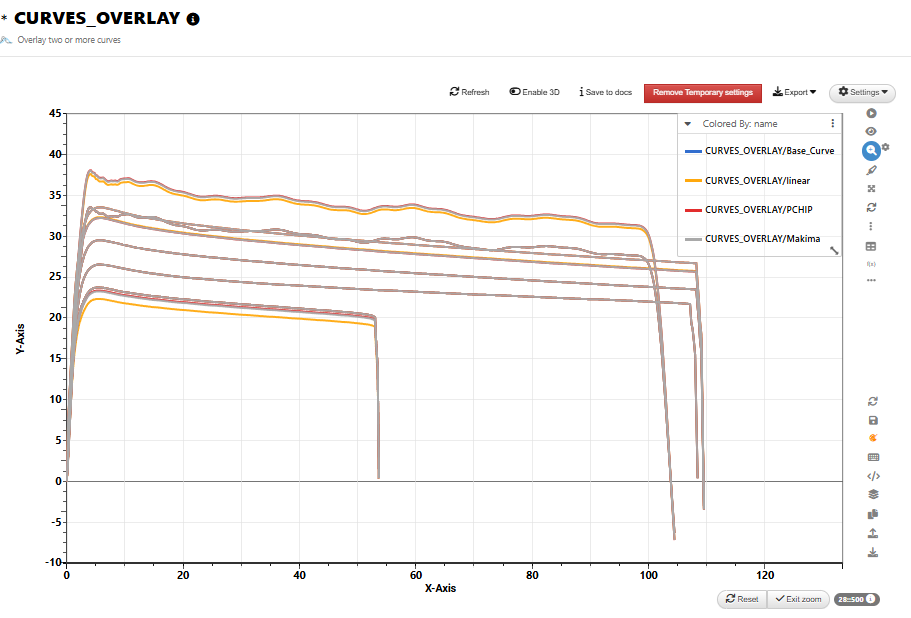
Overlay of scaling types
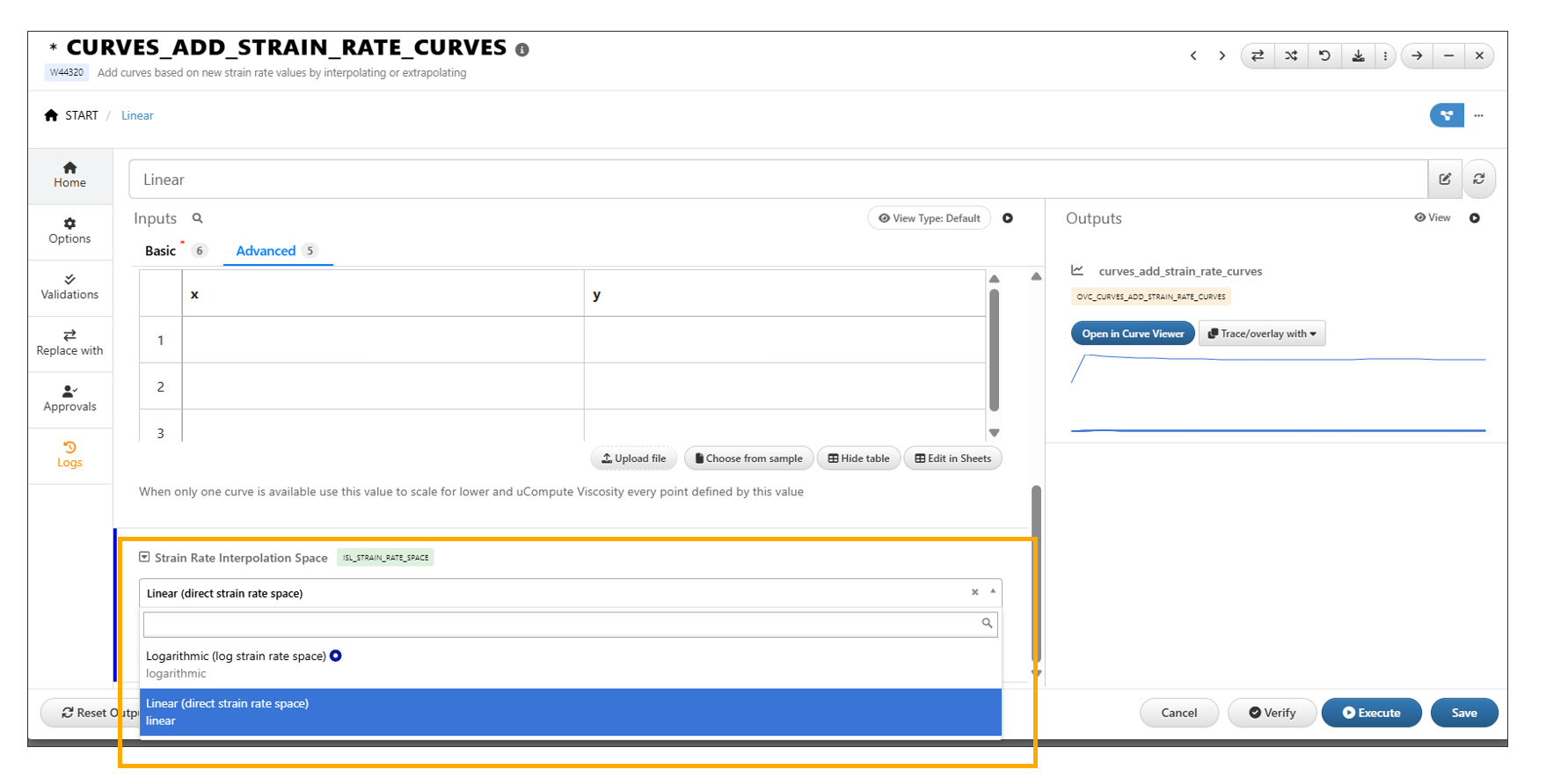
New Input-Strain Rate Interpolation Space
Strain Rate Interpolation Space
Defines the interpolation domain used for generating intermediate strain rate curves.
Supported Options
- Linear Space Interpolates strain rate values linearly. Suitable for datasets where strain rates change uniformly.
- Logarithmic Space Performs interpolation in logarithmic scale. Recommended for datasets with exponential variation in strain rates, ensuring better accuracy across a wide range.