
Engineering stories, methods, and ideas.
Practical work from simulation, physical testing, data, automation, and the decisions that connect them.
Latest articles
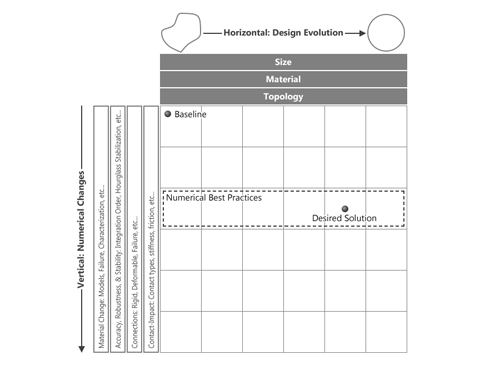
Simulation Based Product Design Using LS-DYNA – Single Code & Single Model Benefits
Over the past decade, the ability of simulations driving the design has grown rapidly and today’s confidence in simulations results is a good testament to …
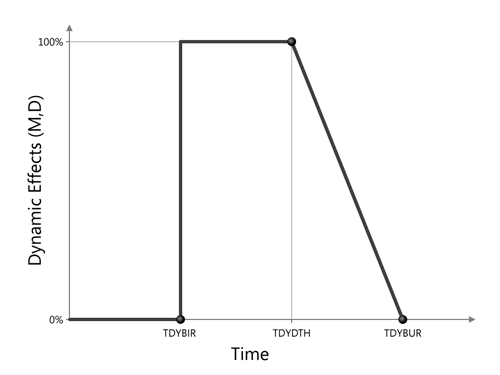
Implicit Dynamics – Now with Birth, Death, and Burial Properties
When solving static or quasi-static type problems, the default Implicit Static solver (IMAS=0 in CONTROL_IMPLICIT_DYNAMICS) requires a well-conditioned …
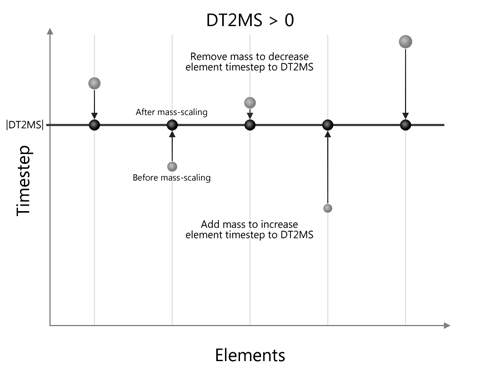
Overview of Mass-Scaling in LS-DYNA
Mass-scaling is a term that is used for the process of scaling the element’s mass in explicit simulations to adjust its timestep. The primary motivation is …
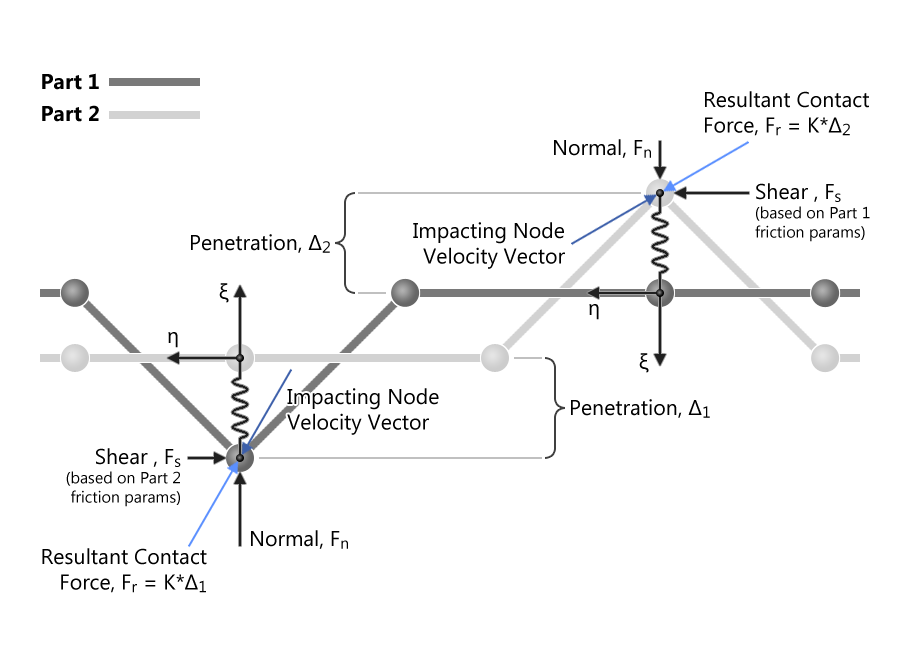
Modeling Friction in Contact
In contact-impact interactions, friction plays an important role in accurately capturing the sliding behavior. In LS-DYNA, the coulomb treatment of …
Example of *DEFINE_CURVE_FUNCTION
Starting in LS-DYNA version 970 and later, we can now use expressions instead of digitized values to define an XY curve. Optionally, the expressions can …
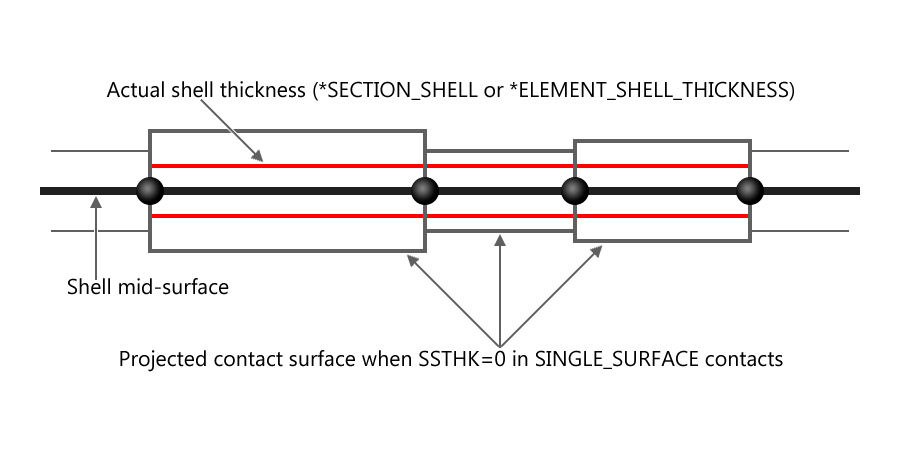
Contact Thickness in Single Surface Contact
Single surface contacts have dramatically eased the way we currently model the contact-impact treatment for complicated simulation models in LS-DYNA. One …
Mapping of Deformed Nodal Coordinates for SubSystem/Component Analysis
Several analyses sometimes requires the mapping of nodal positions (coordinates) from a previous run for use in current run. For single component this is a …
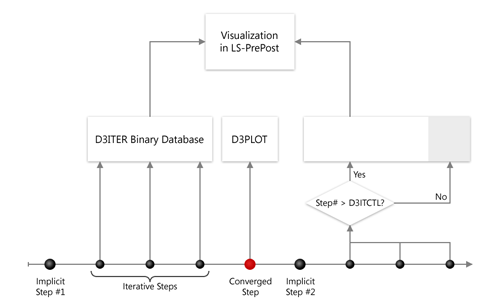
Identifying Problem Areas for Poorly Converging Implicit Solutions
For non or poorly converging implicit solutions, the parameter D3ITCTL parameter in *CONTROL_IMPLICIT_SOLUTION may come handy to isolate regions of …
Number of Shell History Variables in *INTERFACE_SPRINGBACK
*INTERFACE_SPRINGBACK provides an easy way to store a part’s state at the end of a simulation for later use. The part’s state consists of element history …
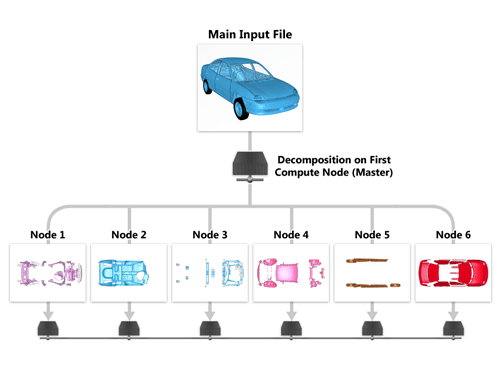
Simulation Model Decomposition Using Recursive Coordinate Bisection (RCB) Method
In the area of distributed computing using Massively Parrallel Processing (MPP) LS-DYNA, finite element model decomposition is performed after initial …
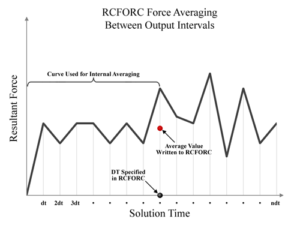
Contact Force Output to RCFORC
The ASCII file “RCFORC” contains the incremental forces contributed by contact algorithms. Due to the nature of the contact-impact interactions, the raw …
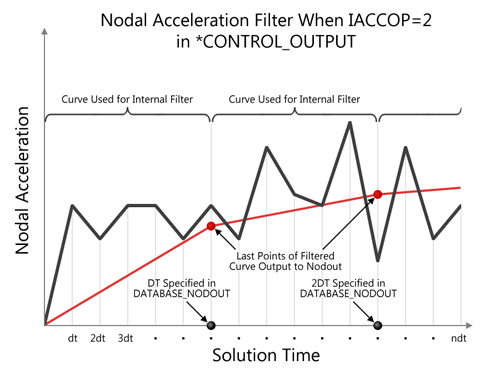
Built-In Filtered Nodal Acceleration Output Using IACCOP in *CONTROL_OUTPUT
Starting in LS-DYNA v971, nodal accelerations can be filtered before being output to the ASCII file “NODOUT”. The type of filter can either be a built-in …