
Engineering stories, methods, and ideas.
Practical work from simulation, physical testing, data, automation, and the decisions that connect them.
Latest articles
Contact Modeling in LS-DYNA
This 4 part article, orignally published in the FEAINFORMATION newsletter between August and December 2001, can be downloaded here: Contact Modeling.pdf
Deformability Switching in LS-DYNA
Among several simple yet powerful techniques available in LS-DYNA, switching of bodies that affects their deformability (at run time) is certainly one of …
Airbag Leakage Modeling in LS-DYNA
In the area of numerical simulations involving the use of airbags to absorb impact energy, passively or actively, accurate definitions of airbag leakage …
Seamless Mesh Coarsening for Shell Elements in LS-DYNA
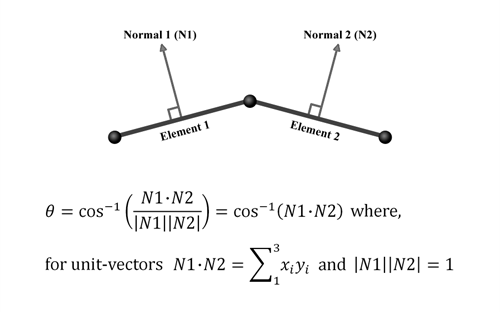
Element count in finite element simulations are increasing faster than the “Moores law” used in chips. There are several reasons for this increase among …
One-Way and Two-Way Contact Definitions
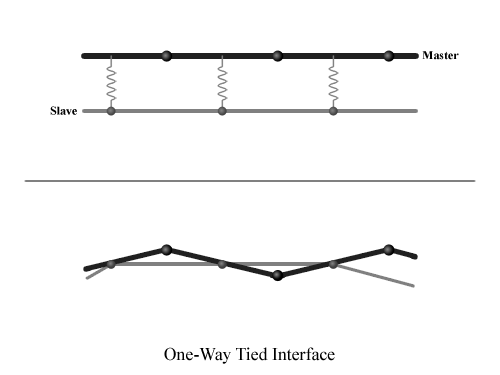
This post will give you a brief summary of one-way and two-way contact definitions. The one-way/two-way refers to the treatment of slave nodes impacting …
Automatic Timestep Control for Implicit Simulations
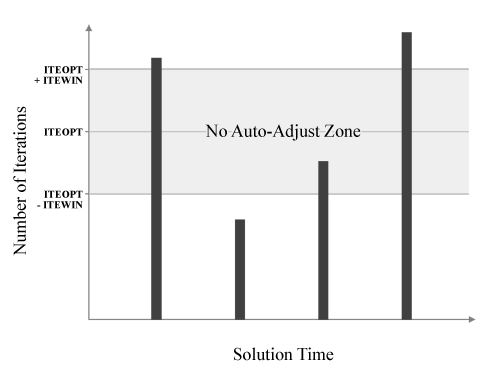
The known advantage with implicit simulations is that the solution is unconditionally stable allowing larger values of timestep. In implicit static …
Use of *SENSOR in LS-DYNA 971
A powerful new feature available in LS-DYNA version 971 is the *SENSOR keyword. To briefly summarize the Keyword Manual description, *SENSOR allows …
Strain-rate Effects in Implicit
When migrating input files or using internal switching from Explicit to Implicit solution type, the influence of strain-rate effects, if defined for the …
LS-DYNA Simulation Template
Using the newly implemented feature of embedding FORTRAN type expressions in LS-DYNA using the *PARAMETER_EXPRESSION keyword, it is becoming easier to …
Element Formulation Switch for Implicit
Under-integrated elements are widely popular in the explicit field for their robustness and computational efficiency. However, their use in Implicit …
Dynamic Solution Type using IMFLAG in *CONTROL_IMPLICIT_GENERAL
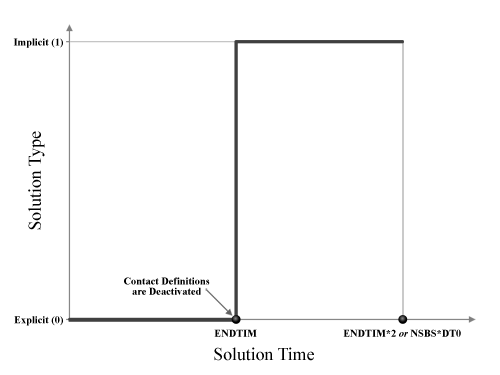
There are two classical solution methods available in LS-DYNA to solve a given problem. The widely popular “Explicitâ€? solution scheme, using the …
Ensuring Stable, Robust, and Accurate LS-DYNA Models
LS-DYNA simulation models, both large and small, frequently suffer from undetected modeling errors that can cause runs to die prematurely. Sometimes even …